Sign In
Sign Up
Select Your Country
 Turkey (Türkçe)
 Worldwide (English)
Turkey (Türkçe)
Worldwide (English)
Turkey (Türkçe)
Worldwide (English)
Worldwide (English)
Turkey (Türkçe)
Worldwide (English)
Turkey (Türkçe)
Worldwide (English)
 WELCOME Kupon Kodunu Kullanarak İlk Siparişlerinize Özel %10 İndirim İmkanından Faydalanabilirsiniz.
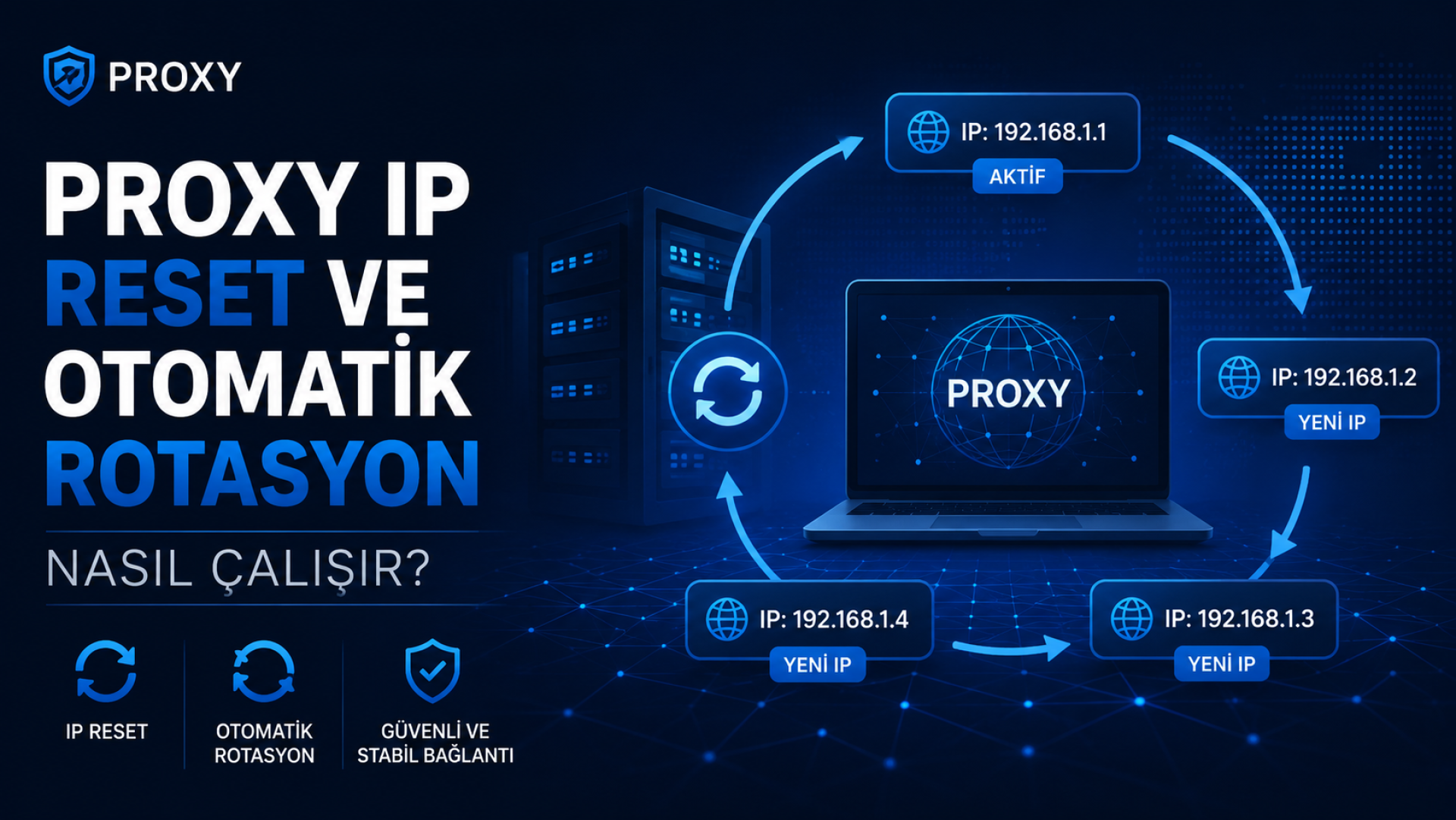
Proxy IP reset is the action of renewing the exit IP address of the proxy server in use and switching to a new address. LivaProxy offers this function in its Turkey based mobile proxy packages in two separate layers: IP Reset Link and Automatic IP Reset. A mobile proxy is the type of IP that exits through GSM carrier infrastructure and appears as a real mobile device. LivaProxy's monthly mobile proxy packages start at 1,400 TL with 15GB of traffic, and IP reset is a standard feature of all mobile packages. Changing the IP address provides the ability to connect with a different identity over the same subscription.
IP reset is triggered in two ways: manual and automatic. Manual reset is the user renewing the IP with one click from the panel or from a special link provided to them. Automatic reset is the IP changing on its own at a defined interval. LivaProxy offers both methods as defined within the mobile proxy subscription, with no additional package required.
IP reset uses the mobile carrier's logic of dynamic IP assignment per subscriber. On mobile networks, a device can receive a different public IP for each new session. The proxy provider forwards this renewal request to the carrier infrastructure and changes the exit IP. When the reset link defined for the user in the LivaProxy panel is called, a new mobile IP is assigned to the relevant port, and subsequent requests go from this new address.
The process runs over a single subscription and fixed connection details. The user's proxy connection details (IP, port, username, password) stay the same; only the exit IP in the background changes. This way, automation software continues to run without reconfiguration. After the reset, the old IP is released and returns to the carrier pool.
LivaProxy mobile proxy packages support HTTP/HTTPS and SOCKS5 protocols. The reset operation is protocol independent: regardless of which protocol you connect with, the exit IP is renewed. Traffic is measured on a GB basis, and the reset operation does not produce extra traffic consumption.
Manual IP reset is a trigger under the user's control. The user calls the reset link when they finish their job or need a new IP. This method is suited for scenarios where the user decides when to change. LivaProxy adds this feature to every mobile proxy subscription under the name IP Reset Link.
Automatic rotation is the binding of IP change to a predefined rule. Automatic IP reset works on a time basis: the IP renews on its own at a defined interval. One step beyond this is the rotating structure that changes the IP on every request. LivaProxy's product assigns a different IP on each connection request and provides per request rotation, sold at a starting price of 1,250 TL.
Manual reset: The user triggers it; the IP changes when desired; session control is in the user's hands.
Automatic reset: Tied to a time interval; the IP renews on its own at defined periods.
Rotating structure: A different IP on every request; designed for high volume data collection and concurrent sessions.
IP reset is a standard feature of LivaProxy's mobile proxy product family. IP Authorization, IP Reset Link, and Automatic IP Reset are defined in all monthly, weekly, and daily mobile packages. Rotation behavior varies by product: mobile proxy offers time based reset, while rotating IPv6 proxy offers request based rotation. The table below shows the IP management features and starting prices in LivaProxy products.
IP authorization (whitelist) is a security layer that provides access to the proxy only from permitted IP addresses. The user defines their own connection IP in the panel, and the proxy accepts only requests coming from that address. LivaProxy offers this method as an alternative to username and password authentication. IP authorization controls not the proxy's exit IP but the source IP of the user signing in to the proxy.
The reset operation does not break the authorization setting. While IP reset renews the exit address, the entry authorization stays fixed. For this reason, after a user adds their IP to the whitelist, they can reset the exit IP as much as they want; the access rules do not change. The two mechanisms work at different ends: authorization manages the entry side, and reset manages the exit side.
IP reset and rotation reduce running into account or session limits by distributing the number of requests made from a single identity. In social media management, when a different exit IP is needed for each account, reset provides this separation. In data collection (web scraping), when sending many requests from a single IP needs to be avoided, rotation comes into play. LivaProxy's target audience consists of social media management, gaming, data collection, and automation users.
Rotation frequency is set based on the use case. In operations where a single session must last for a long time (for example, staying connected to one account for a long period), infrequent reset is preferred. In high volume and parallel requests, per request rotation is efficient. Three practical points stand out:
Operations that need session stability are run with manual reset and long interval automatic reset.
For high volume jobs like data collection, rotating IPv6 proxy changes the IP per request.
Performing reset while IP authorization is active does not affect the access settings; the connection continues uninterrupted.
Proxy IP reset is the core function that renews the exit IP; LivaProxy offers it both manually and automatically in all its mobile packages within the monthly mobile proxy starting at 1,400 TL. Manual reset provides user control, and automatic reset provides time based renewal. The rotating structure that changes the IP on every request is found in LivaProxy's rotating IPv6 proxy product starting at 1,250 TL.
IP authorization and reset work together smoothly: one manages the entry side, the other the exit side. The right method depends on the use case; infrequent reset is suited for session stability, and per request rotation is suited for high volume data collection. LivaProxy mobile packages support HTTP/HTTPS and SOCKS5 protocols, and the reset operation is protocol independent.
Prices and package features may change; verify current information from the official LivaProxy page before purchase.
Proxy IP reset is the action of renewing the exit IP address of the proxy server in use and switching to a new address. In LivaProxy mobile proxy packages, this feature is defined in two layers as IP Reset Link and Automatic IP Reset. The connection details stay fixed; only the exit IP in the background changes.
IP reset uses the mobile carrier's dynamic IP assignment logic. When the reset link defined in the panel is called, a new mobile IP is assigned to the relevant port, and subsequent requests go from this address. The operation is protocol independent and does not consume extra traffic. The old IP is released and returns to the carrier pool.
Manual reset is the user triggering the IP change at the time they want, and it leaves session control to the user. Automatic rotation is the IP changing according to a predefined rule. Automatic IP reset is time based, while rotating IPv6 proxy changes the IP per request.
IP authorization does not break during reset. Authorization controls the source IP signing in to the proxy, while reset renews the exit IP. Because the two mechanisms work at different ends, the user can reset the exit IP as much as they want after defining a whitelist, and the access rules stay fixed.
IP reset is a standard feature of LivaProxy's monthly, weekly, and daily mobile proxy packages. These packages include IP authorization, manual, and automatic IP reset. Per request rotation is found in the rotating IPv6 proxy product starting at 1,250 TL. Static IP products do not offer rotation.